
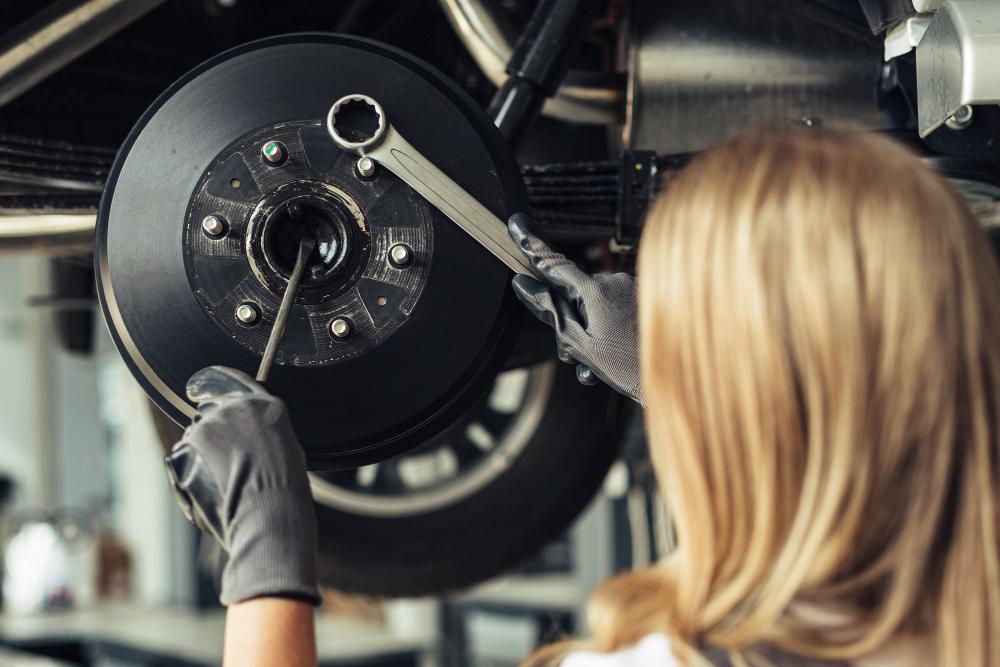
Many drivers dismiss humming noises or steering vibration as normal road feedback. In reality, these are often early signs of a failing hub bearing. When this component begins to wear out, it affects wheel stability, braking efficiency, and steering control. Left unaddressed, hub bearing failure can lead to wheel misalignment, uneven tire wear, or even complete wheel separation—posing serious safety risks.
What a Hub Bearing Does in Your Vehicle
A hub bearing allows the wheel to rotate smoothly while supporting the vehicle’s weight and maintaining proper alignment with the suspension and braking system. It is a sealed unit designed to handle constant rotational force, road impact, and heat. A properly functioning hub bearing ensures smooth wheel rotation, accurate ABS sensor readings, and stable handling at all speeds.
Common Warning Signs of Hub Bearing Failure
Hub bearing problems rarely appear suddenly. Early symptoms include a grinding or humming noise that increases with speed, vibration felt through the steering wheel, loose steering response, or uneven tire wear. In advanced stages, drivers may notice pulling to one side or reduced braking performance. Replacing a worn hub bearing at the right time helps prevent further damage to suspension and braking components.
How Poor-Quality Bearings Lead to Premature Wear
Low-quality hub bearings often fail due to weak materials, poor sealing, or inaccurate tolerances. This allows dirt, moisture, and heat to degrade internal components quickly. As friction increases, lubrication breaks down, causing excessive noise and instability. Installing a high-quality hub bearing ensures better sealing, smoother rotation, and longer service life under daily driving conditions.
Impact on Steering, Braking, and Driving Comfort
A failing hub bearing doesn’t just create noise—it affects how your vehicle handles. Wheel play caused by bearing wear reduces steering precision and increases braking distance. ABS and traction control systems may also malfunction due to inaccurate wheel speed signals. A properly functioning hub bearing restores smooth steering, consistent braking, and overall driving comfort.
Why Timely Replacement Saves Money
Many drivers delay hub bearing replacement to avoid immediate repair costs. Unfortunately, this often leads to more expensive repairs later. A worn bearing can damage the wheel hub, axle, suspension components, and tires. Timely replacement minimizes labor costs and prevents secondary damage, making it a cost-effective maintenance decision.
Installation Quality Is Just as Important as Bearing Choice
Even the best hub bearing can fail prematurely if installed incorrectly. Proper torque specifications, clean mounting surfaces, and accurate alignment are critical. Over-tightening or under-tightening can cause internal stress and early failure. Professional installation ensures the bearing performs as intended and maintains long-term reliability.
Final Thoughts
Hub bearing failure often starts quietly but can escalate into dangerous driving conditions. Addressing noise, vibration, or steering issues early protects your vehicle, improves handling, and ensures road safety. Choosing the right hub bearing and replacing it on time is essential for long-term performance and peace of mind.

 English
 Arabic
 French
 Spanish
 Portuguese
 Deutsch
 Turkish
 Italiano
 Russian
 Romaian
 Portuguese (Brazil)
 Greek
Greek