
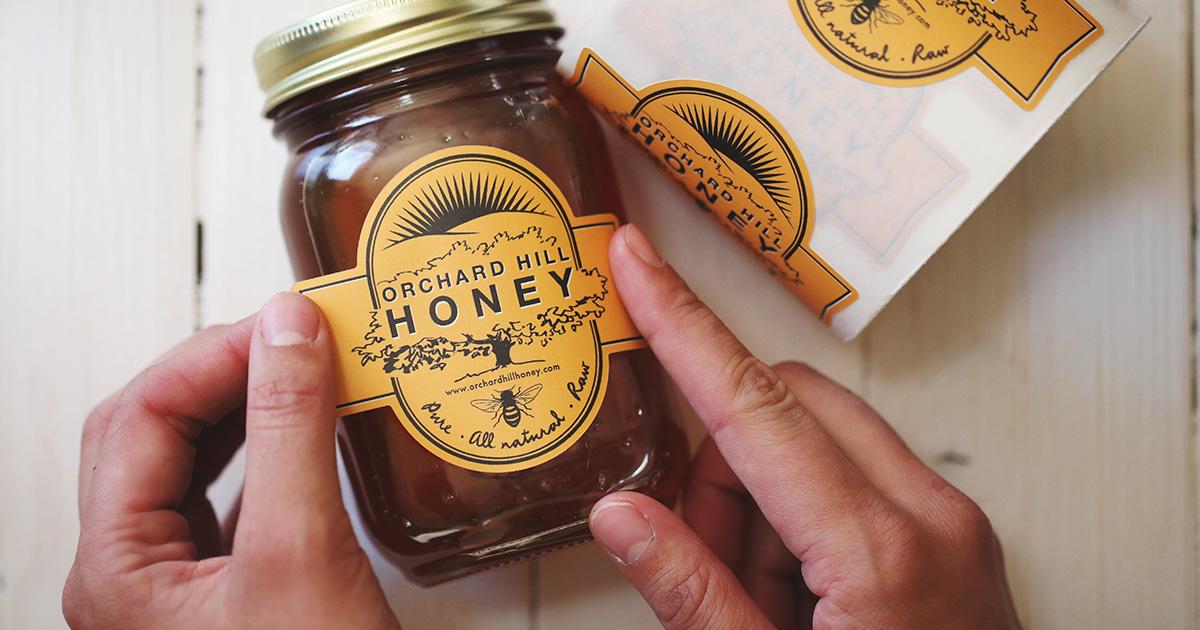
A die cut roll is exactly what it sounds like: a continuous spool of pre-cut labels shaped to your exact design, produced by pressing a sharp metal die through label stock. Every label comes off clean, precise and ready to apply by hand or machine. Businesses rely on them for product branding, packaging and high-volume labeling because the format is genuinely faster and cheaper at scale than anything involving flat sheets.
What Is a Die Cut Roll?
Think of it as a set of custom-shaped labels wound onto a single spool. Each one is pre-cut from a larger sheet using a die, a metal tool machined to your exact outline, then left on a liner so you can dispense them cleanly.
The difference between these and sheet labels matters more than people expect, especially once you're applying labels to a few hundred bottles a day. Sheet labels require manual peeling and careful placement. Roll format feeds directly into a label applicator, so the machine handles alignment, speed and consistency for you. At makprinting.com, you can order die cut labels in custom shapes with fast turnaround, so your products reach shelves looking sharp without delays.
Die Cut Roll Manufacturing Process
Making a die cut roll starts with a digital design file. Your artwork gets converted into a vector dieline, a precise cut path the machine reads to know exactly where the die should press. From there, production follows a clear sequence.
- Dieline creation: A designer builds a vector cut path matching your label shape.
- Die tooling: A metal die is fabricated to that exact cut shape.
- Printing: The label stock is printed using digital or flexo presses.
- Die cutting: The printed roll feeds through the machine; the die cuts through the top layers while leaving the liner intact. This is called kiss-cut cutting, and it's what keeps every label peelable.
- Matrix removal: Waste material surrounding each label, called the matrix, gets stripped away.
- Rewinding: Finished labels wind back onto a standard 3-inch core, ready for shipping or application.
What's striking here is how much the matrix removal step affects your end result. Rolls delivered with the matrix removed are preferred for machine application because they reduce jams and adhesive buildup, while matrix-on rolls protect labels during transit and suit hand application better. Most buyers don't know to ask about this until something goes wrong.
Rotary vs Flatbed Techniques
Rotary die cutting uses a cylindrical die that cuts continuously as material feeds through the press, making it the fastest method for large production runs. Flatbed die cutting works differently: the die presses down vertically onto the material in a stamping motion, which suits thicker materials and lower-volume jobs better.
Semi-rotary die cutting sits between the two. It uses a single magnetic cylinder with interchangeable flexible die tools, and the web moves in a start-stop motion that lets one cylinder cut different shapes without swapping tools for every job. For most roll labels ordered in medium to large quantities, rotary is the default choice. It handles thin, flexible materials like film and polypropylene far better than flatbed, and the speed difference at 10,000-plus units is significant.
Key Materials and Specifications
Your material choice affects durability, print quality and where the label can actually survive. I've noticed that buyers often over-specify here, ordering vinyl when BOPP would do the job at lower cost. Here are the three materials worth knowing.
BOPP (Biaxially Oriented Polypropylene): The industry standard for product labels. BOPP labels are waterproof and resistant to oil and scratches, which is why they're the go-to choice for food, beverage, cosmetic and industrial packaging. For outdoor use, they hold up for six months to two years depending on UV exposure and weather.
Vinyl: Laminated vinyl carries a 5-plus year outdoor life and handles intricate designs with strong adhesive for long-lasting application. Use it when labels face harsh conditions, chemicals or rough handling.
Paper: The cost-effective pick for indoor and temporary use. It doesn't waterproof, but for shipping inserts, retail stickers or anything short-term, it costs noticeably less per unit.
Unwind Direction and Core Size
Unwind direction describes the orientation of labels as they come off the roll. The label industry uses standard codes for this specifically to avoid confusion when machine-applying labels, keeping product and label properly aligned. There are eight unwind directions in total; for hand application, it doesn't matter which you choose.
Always confirm unwind direction with your applicator or equipment specs before ordering, since a mismatch means re-rolling the entire job. Most roll-fed labels ship on a standard 3-inch diameter core, which fits the majority of label dispensers and automated applicators on the market.
Applications and Industry Uses
Die cut stickers and labels in roll form appear across more industries than most people realize. Their shape flexibility and machine compatibility make them practical for almost any product that needs clear branding or regulatory information.
Food and beverage: Bottles, jars, cans and pouches all use roll labels. BOPP handles refrigeration and repeated moisture contact without peeling off the surface.
Cosmetics and personal care: Custom shapes like ovals, leaf silhouettes or brand-logo cutouts help beauty products stand out on crowded shelves. The material holds full-color print well and resists the oils that come from handling.
Pharma and healthcare: These applications need consistent labels with barcodes and regulatory text, applied without error during high-speed bottling. Sticker rolls feed cleanly through automated applicators, which is exactly why this industry favors the format over sheet labels.
E-commerce and shipping: Branded packaging seals, product stickers and thank-you labels all work well in roll format. You apply hundreds of them fast, and the custom shape reinforces brand recognition with no added per-unit cost.
Industrial and chemical: Vinyl and BOPP labels hold against solvents, extreme temperatures and abrasive surfaces. Most include hazard symbols, SKU codes or serialized barcodes that need to stay legible for years.
Benefits of Custom Die Cut Rolls
Choosing custom die cut rolls over standard sheet labels gives you concrete advantages once volume goes up. The data suggests the break-even point is often lower than buyers expect, sometimes as few as 500 units.
Speed of application: Roll format works with label applicators, so you can label hundreds of products per hour with minimal manual effort. Die cut roll labels are the most cost-effective choice for businesses branding products in high quantities, balancing affordability with large-scale output.
Consistent quality across a run: Modern die-cutting technology holds tolerances to fractions of a millimeter, ensuring consistency for every label in a production run. You don't get the shape variation that creeps into hand-cut or manually applied alternatives, which matters when your packaging is what customers see first.
Flexible finishing: Gloss or matte lamination, UV coating and foil effects can all be added to laminated rolls before winding. The protection improves and shelf appeal goes up, with no separate finishing run needed.
Buying Guide: What to Check Before Ordering
A few spec checks before you order will save real money. Getting these wrong typically means either scrapping a run or paying to re-roll every label.
Choose the right material first. Labels on refrigerated bottles or products that get wet need BOPP or vinyl. Standard paper works fine for indoor packaging and costs less per roll.
Know your quantity before pricing. For high-volume orders, the unit cost per label drops significantly even with a higher upfront tooling charge, particularly for rotary dies. For smaller runs, flatbed tooling is more practical for testing a new design or a seasonal label.
Confirm unwind direction. If you use an automatic applicator, the wrong wind direction means the machine can't feed labels correctly. Check your applicator manual or call the manufacturer first.
Prepare vector artwork. Most printers require EPS, AI or PDF format with a clear cut path. Files should be in CMYK at 300 dpi, scaled to 100 percent. A 0.125-inch bleed around the cut line prevents white edges if the die shifts slightly during cutting (this happens more often on long runs than on short ones).
Specify matrix preference. Machine applicator? Order with matrix removed. Applying by hand or shipping the labels before use? Matrix-on protects them in transit.
At makprinting.com, you get precision punching on BOPP, vinyl or paper stock with full control over shape, finish and quantity. The team advises on material and unwind direction based on your application method, so you don't waste an entire production run on a setup error that takes 30 seconds to prevent.
Common Mistakes to Avoid
Even experienced buyers run into issues that delay orders or waste material. These come up repeatedly.
Skipping the proof. Always request a digital proof before full production. Proofs catch shape errors, color shifts and cut path issues before they affect thousands of labels. (Skipping this step to save a day almost always costs more time in reprints.)
Wrong material for the surface. Labels applied to curved, textured or flexible surfaces need a conformable material like BOPP or vinyl. Paper labels crack or peel on rounded containers, particularly after any moisture exposure.
Ignoring sensor compatibility. Clear labels can cause applicator sensors to miss the gap between labels; adding a white block or timing mark to the design resolves this. If you're ordering clear BOPP labels, ask your printer about timing marks before production starts, not after.
Under-ordering for the tooling cost. Rotary dies carry an upfront tooling charge. If your quantity is too low, the per-label cost makes the order expensive. Here's the contrarian take most suppliers won't offer: for very small runs below 300 labels, digital die cutting with no tooling charge is often the smarter call, even though the per-unit cost looks higher on paper. You save the tooling fee entirely.
Getting these details right before ordering saves money, time and rework. If you're placing your first die cut roll order, makprinting.com offers free consultations to walk you through specs, materials and artwork requirements, so your first run comes out right.

 Arabic
 French
 Spanish
 Portuguese
 Deutsch
 Turkish
 Dutch
Dutch
 Italiano
 Russian
 Romaian
 Portuguese (Brazil)
 Greek
Greek