
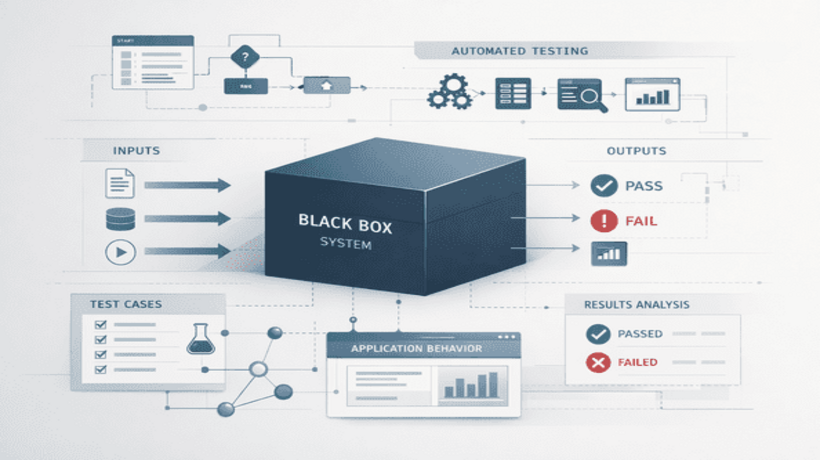
In fast-paced software development, QA teams often face the challenge of delivering high-quality releases under tight deadlines. When time is limited, running every test case is not feasible, making it essential to prioritize tests effectively. Black box testing plays a key role in this scenario by focusing on validating functionality from an end-user perspective without requiring knowledge of the internal code structure.
This article shares practical, real-world strategies for prioritizing black box test cases while ensuring critical workflows remain stable, even when deadlines are aggressive.
Why Prioritization Matters
Under time constraints, running all test cases can lead to:
- Delayed releases
- Overworked QA teams
- Missed critical defects in production
Prioritization ensures that the most important test cases are executed first, reducing risk and improving confidence in the release.
Key Strategies for Prioritizing Black Box Test Cases
1. Focus on Critical Business Workflows
Identify the features and workflows that directly impact users or revenue. Prioritizing test cases around these areas ensures the most important functionality is validated first.
Example: For an e-commerce application, focus on checkout, payment processing, and account login before testing less critical modules like UI customization.
2. Leverage Risk-Based Testing
Use risk assessment to rank test cases according to the likelihood and impact of potential defects. Consider factors like:
- Complexity of the feature
- Frequency of usage
- Previous defect history
Lesson Learned: Prioritizing high-risk areas helps catch defects that would cause the greatest business impact under tight deadlines.
3. Integrate with Regression Testing Practices
When deadlines are short, combining black box testing with existing types of regression testing can maximize coverage:
- Retest critical workflows affected by recent changes
- Use selective regression to focus only on impacted modules
- Automate recurring tests for stable features to save time
Benefit: This approach ensures stability without re-running the entire test suite, freeing time for high-priority black box tests.
4. Use Historical Defect Data
Analyze past defect reports to determine which modules are prone to issues. Prioritize test cases targeting historically problematic areas to reduce the risk of recurring bugs.
Lesson Learned: Historical insights help QA teams focus on likely problem spots instead of spending time on low-risk areas.
5. Collaborate with Developers and Product Teams
Engage with developers and product managers to understand:
- Features that were recently modified
- New functionality that might affect existing workflows
- Known risks or technical debt areas
Benefit: Collaboration ensures the most relevant black box tests are prioritized, improving efficiency and coverage.
6. Implement Test Case Categorization
Categorize test cases into groups such as:
- Critical
- High
- Medium
- Low priority
Run tests in order of priority, ensuring that the most important scenarios are executed first.
Lesson Learned: Clear categorization helps QA teams make quick decisions under tight timelines.
7. Automate Where Possible
Automate repetitive black box test cases or those that are stable and low-risk. This allows QA teams to focus manual testing efforts on new or high-risk functionality.
Example: Automate login, payment validation, and API response checks, while manually testing new UI features or complex workflows.
Real-World Example
A fintech company faced a tight deadline for releasing a critical update:
- Using historical defect data and risk-based prioritization, the QA team identified 40% of test cases as critical.
- Black box testing focused on high-risk workflows such as transaction processing and account management.
- Selected regression tests were automated to save time.
Outcome: The release was completed on schedule with no critical defects in production.
Conclusion
Prioritizing black box test cases under tight deadlines requires a practical, structured approach:
- Focus on critical workflows
- Apply risk-based analysis
- Leverage types of regression testing strategically
- Use historical defect data
- Collaborate with developers and product teams
- Categorize and automate test cases
By following these strategies, QA teams can maintain high-quality releases even when time is limited, ensuring critical functionality remains reliable for end-users.

 English
 Arabic
 French
 Spanish
 Deutsch
 Turkish
 Dutch
Dutch
 Italiano
 Russian
 Romaian
 Portuguese (Brazil)
 Greek
Greek