
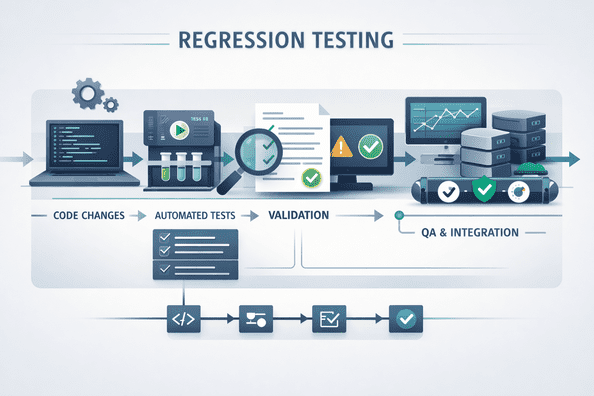
As software systems evolve through feature updates, bug fixes, and performance improvements, ensuring that previously working functionality remains stable becomes essential. Changes in one part of an application can sometimes affect other modules unexpectedly. This is why regression testing is a critical component of modern software quality assurance.
Regression testing helps teams confirm that recent changes have not disrupted existing features. However, performing this testing effectively requires a structured process. Following a well-defined set of steps ensures that testing remains organized, efficient, and capable of detecting potential issues early in the development cycle.
Step 1: Identify Code Changes
The first step in the regression testing process is identifying the parts of the application that have been modified. Code changes may include new features, bug fixes, performance improvements, or configuration updates.
Understanding the scope of these changes helps testers determine which parts of the system might be affected. Development teams often review commit histories, release notes, or change logs to identify modified modules.
Accurate identification of changes ensures that the testing effort focuses on the most relevant areas of the application.
Step 2: Analyze Impacted Areas
Once code changes are identified, the next step is analyzing how these changes might affect other parts of the system. Even a small modification can influence dependent modules, shared components, or integrated services.
Impact analysis helps determine which features, workflows, or system components require validation. This step ensures that regression testing focuses on areas where new problems are most likely to appear.
By carefully evaluating system dependencies, teams can design more targeted testing strategies.
Step 3: Select Relevant Test Cases
After analyzing the impacted areas, testers select appropriate test cases from the existing test suite. Running every test case may not always be necessary, especially in large applications with extensive test libraries.
Test case selection focuses on scenarios that validate affected modules, critical workflows, and commonly used features. In some situations, teams may choose specific scenarios depending on the types of regression testing they intend to perform during the testing cycle.
Selecting the right set of tests helps maintain efficiency while ensuring adequate test coverage.
Step 4: Update or Create Test Cases
Sometimes new features or system changes require updates to existing test cases. Testers may need to modify current tests or create new ones that reflect the latest application behavior.
Maintaining accurate and up-to-date test cases ensures that regression testing continues to validate real system workflows and requirements.
This step is particularly important in agile environments where applications evolve frequently.
Step 5: Execute the Regression Test Suite
After preparing the test cases, the next step is executing the regression testing suite. Tests may be performed manually, automatically, or through a combination of both approaches.
Automated tests are commonly used for repetitive and frequently executed scenarios, while manual testing may be applied for complex workflows or exploratory validation.
Executing the test suite helps verify that previously validated functionality continues to operate correctly after code changes.
Step 6: Analyze Test Results
Once the tests have been executed, the results must be carefully reviewed. Testers analyze failures, error messages, and system responses to determine whether any issues have been introduced by recent changes.
Some failures may indicate actual defects, while others might occur due to outdated test cases or environmental issues. Proper analysis ensures that teams focus on resolving genuine software problems.
This step helps maintain system reliability and improves the effectiveness of regression testing.
Step 7: Report and Fix Identified Issues
When issues are discovered during regression testing, they should be documented and reported to the development team. Clear bug reports help developers understand the problem and reproduce it efficiently.
After fixes are implemented, the affected areas are tested again to confirm that the issue has been resolved and that the fix has not introduced additional problems.
This cycle of testing, reporting, and fixing helps maintain consistent software quality.
Step 8: Maintain and Improve the Test Suite
Regression test suites grow over time as applications expand. Regular maintenance of the test suite ensures that it remains efficient and relevant.
Testers may remove outdated tests, update scenarios based on new requirements, and optimize the suite to reduce redundancy. Maintaining a well-organized test suite helps improve the overall efficiency of regression testing processes.
Continuous improvement of the testing process also ensures that testing strategies evolve alongside the application.
Conclusion
Maintaining software stability during continuous development requires structured and consistent validation of existing functionality. Regression testing provides this validation by ensuring that updates and changes do not negatively affect previously working features.
By following a clear process that includes identifying changes, analyzing impacted areas, selecting relevant test cases, executing tests, and reviewing results, teams can perform regression testing more effectively. A well-organized regression testing process helps organizations deliver reliable software while supporting faster development cycles.

 Arabic
 French
 Spanish
 Portuguese
 Deutsch
 Turkish
 Dutch
Dutch
 Italiano
 Russian
 Romaian
 Portuguese (Brazil)
 Greek
Greek