
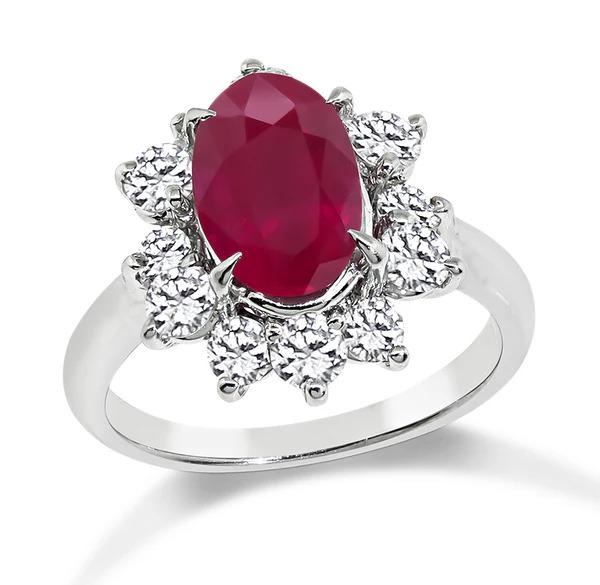
Antique Engagement Rings are more than exquisite pieces of jewelry — they are living fragments of history, crafted in eras where artistry, symbolism, and romance were inseparable. Each antique ring carries the spirit of its time, reflecting the design philosophies, cultural values, and craftsmanship traditions of generations long past. To wear an antique engagement ring is to wear a story shaped by history, beauty, and enduring love.
The Origins of Engagement Rings
The tradition of engagement rings dates back thousands of years. Ancient civilizations used rings to symbolize eternal commitment, often choosing circular shapes to represent infinity. Early rings were simple bands made of iron or bronze, emphasizing meaning over decoration.
As societies evolved, so did the artistry of rings. Precious metals replaced basic materials, and gemstones became symbols of wealth, status, and devotion. By the medieval period, engagement rings had transformed into intricate expressions of craftsmanship, setting the stage for the antique masterpieces admired today.
What distinguishes antique rings is not just age — it is the design language unique to each historical era.
The Georgian Era: Handcrafted Romance
The Georgian period (1714–1837) marks one of the earliest chapters in antique jewelry history. Rings from this era were entirely handmade, long before industrial manufacturing existed. Artisans worked under candlelight, shaping gold and silver with meticulous care.
Designs often featured floral motifs, clusters of gemstones, and closed-back settings that created a mysterious glow. Diamonds were cut by hand, producing softer brilliance compared to modern precision cuts. Imperfections were embraced as part of the ring’s character.
These rings reflect a romantic aesthetic where individuality mattered more than symmetry. No two Georgian rings are identical, making them rare and deeply personal artifacts.
The Victorian Era: Symbolism and Sentiment
The Victorian era (1837–1901) introduced emotional storytelling into jewelry design. This period was shaped by Queen Victoria’s personal taste, which influenced global fashion. Engagement rings became symbols of affection, mourning, loyalty, and remembrance.
Victorian rings often featured hearts, serpents, flowers, and hidden messages spelled through gemstone initials. For example, acrostic jewelry used stones arranged to spell words like “dearest” or “regard.” Each ring was a coded declaration of love.
Gold dominated Victorian designs, and colored gemstones such as sapphires, garnets, and emeralds gained popularity. Diamonds were present but not always central. The era valued sentiment over spectacle, creating rings that spoke quietly but powerfully.
The Edwardian Era: Lace in Metal
The Edwardian period (1901–1915) brought elegance and refinement to engagement rings. Advances in metalworking allowed jewelers to use platinum, a strong yet delicate metal that enabled intricate designs resembling lace.
Edwardian rings are known for:
-
Filigree detailing
-
Milgrain edges
-
Light, airy structures
-
Platinum frameworks
-
Diamond-dominated settings
These rings appear almost weightless, yet their craftsmanship is astonishingly durable. The style reflects the grace of the early 20th century, emphasizing femininity and sophistication.
Edwardian jewelry represents the transition from ornate Victorian sentimentality to modern elegance.
The Art Deco Era: Bold Geometry
The Art Deco movement (1920–1935) revolutionized jewelry design. Inspired by architecture, technology, and global exploration, engagement rings became bold statements of symmetry and innovation.
Art Deco rings are defined by:
-
Geometric patterns
-
Sharp lines and symmetry
-
Contrast between diamonds and colored stones
-
Step-cut gemstones
-
Architectural balance
This era celebrated modernity. Rings no longer whispered romance; they announced confidence. The aesthetic mirrored the optimism of the roaring twenties, embracing progress and glamour.
Art Deco engagement rings remain among the most sought-after antique styles because they feel strikingly contemporary even today.
Craftsmanship That Defines Antique Beauty
What truly separates antique engagement rings from modern jewelry is craftsmanship. Every antique ring was created by human hands using techniques that required patience and mastery. Machine precision did not exist — artistry depended entirely on skill.
Hand-cut gemstones display individuality. Metalwork reveals subtle variations that prove authenticity. These imperfections are not flaws; they are signatures of the artisan.
Antique rings were built to last. Jewelers expected their creations to be worn for lifetimes and passed through generations. This philosophy of durability contributes to their survival today.
Each ring is both artwork and engineering.
The Emotional Value of Antique Rings
Antique engagement rings carry emotional depth beyond their physical beauty. They have already witnessed decades of love stories. Choosing an antique ring connects modern couples to a lineage of romance.
Many people are drawn to the idea that their ring existed before them. It has history. It has memory. It has endured time.
This emotional continuity transforms a ring into a symbol of permanence. It suggests that love is part of a larger human narrative — one that extends backward and forward across generations.
Few modern objects offer this sense of connection.
Sustainability and Ethical Appeal
Antique engagement rings also align with modern values of sustainability. Choosing an existing piece reduces the need for new mining and manufacturing. It is an environmentally responsible choice that celebrates preservation over consumption.
In a world increasingly concerned with ethical sourcing, antique jewelry offers transparency through history. The materials have already been mined; their impact belongs to the past. Wearing antique rings honors craftsmanship without contributing to new environmental strain.
Luxury becomes thoughtful rather than excessive.
Why Antique Rings Remain Timeless
Fashion changes constantly, yet antique engagement rings continue to captivate. Their appeal lies in authenticity. They were not designed to follow trends — they created them.
Each era left a distinct fingerprint on jewelry history. When someone wears an antique ring, they carry that fingerprint into the present. The ring becomes a conversation between past and future.
Timeless beauty emerges from design that respects proportion, symbolism, and craftsmanship. Antique rings embody these principles effortlessly.
They do not age; they mature.
Final Thoughts
The history and beauty behind antique engagement rings reveal more than decorative evolution — they reveal human emotion preserved in metal and stone. From Georgian romance to Art Deco boldness, each era contributed to a legacy of artistry that continues to inspire.
Antique rings are not relics; they are living treasures. They remind us that love stories are not isolated moments but part of a continuum stretching across centuries. When a modern couple chooses an antique engagement ring, they are not just beginning their story — they are joining one that has been unfolding for generations.
And in that quiet continuity lies their greatest beauty.

 English
 Arabic
 French
 Portuguese
 Deutsch
 Turkish
 Dutch
Dutch
 Italiano
 Russian
 Romaian
 Portuguese (Brazil)
 Greek
Greek